Bagikan
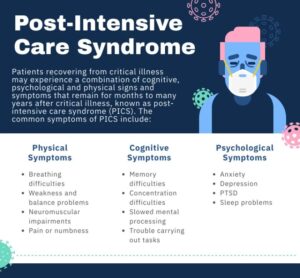
Post-Intensive Care Syndrome (PICS) refers to a collection of physical, cognitive, and mental health impairments that persist after a patient has been discharged from the intensive care unit (ICU). It affects both ICU survivors and their families (often called PICS-F when referring to family members).
Key Aspects of PICS:
- Physical Impairments:
- Muscle weakness (ICU-acquired weakness)
- Fatigue and reduced mobility
- Chronic pain
- Respiratory issues (especially after prolonged mechanical ventilation)
- Cognitive Impairments:
- Memory problems
- Difficulty concentrating (brain fog)
- Slowed mental processing
- Executive dysfunction (trouble planning or organizing)
- Mental Health Disorders:
- Anxiety
- Depression
- Post-traumatic stress disorder (PTSD)
Causes and Risk Factors:
- Prolonged ICU stay (especially with mechanical ventilation)
- Sepsis or severe infections
- Sedation and delirium during ICU treatment
- Multiorgan failure
- Pre-existing conditions (e.g., chronic illnesses, mental health issues)
Impact on Families (PICS-F):
- Emotional distress, anxiety, and PTSD in family members
- Caregiver burden and burnout
Management and Recovery:
- Physical rehabilitation (physiotherapy, strength training)
- Cognitive therapy and mental exercises
- Psychological support (counseling, PTSD treatment)
- Support groups for both patients and families
Prevention Strategies in ICU:
- Reducing sedation levels
- Early mobilization (getting patients moving sooner)
- Delirium management protocols
- Family involvement in care