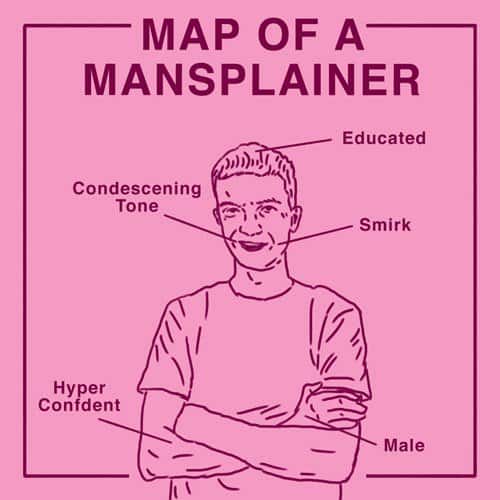
Mansplaining is when a man explains something to someone (typically a woman) in a condescending or patronizing way, often assuming the listener doesn’t already know about the topic – even when they might actually be more knowledgeable about it than the explainer.
The term combines “man” and “explaining” and describes situations where the explanation is driven more by the speaker’s assumptions about gender and expertise rather than an actual need for clarification. Common characteristics include:
- Explaining something the person already knows or is an expert in
- Using an overly simplified or condescending tone
- Not checking if the explanation is wanted or needed
- Dismissing or talking over the other person’s input
- Assuming authority on a subject without having superior knowledge
For example, a man explaining how periods work to a gynecologist, or interrupting a female engineer to explain basic engineering concepts she uses daily.

The term gained popularity around 2008 and highlights how gender dynamics can affect communication patterns. It’s worth noting that condescending explanations can happen between people of any gender, but “mansplaining” specifically refers to this behavior when it’s rooted in gendered assumptions about who knows what.